
What My First Chinese Client Taught Me About Recovery
How round-the-clock support, traditional care, and intentional rest can transform a mother’s healing journey
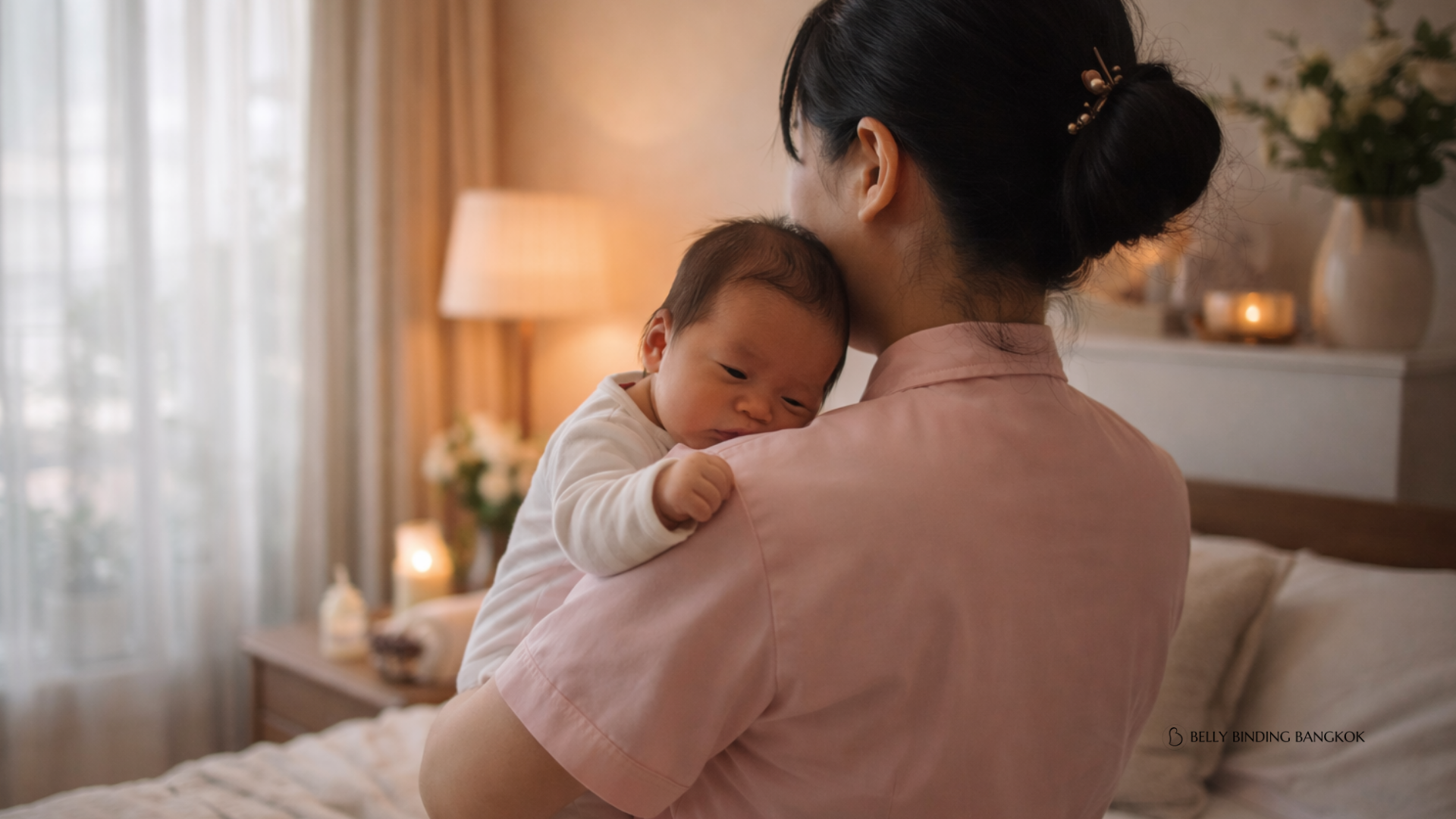
Working with my first Chinese postpartum client truly opened my eyes to how deeply recovery can be supported when a mother is fully cared for.
In many Chinese families, it is common to have a confinement nanny (月嫂) during the postpartum period. Here in Bangkok, this mama had flown her nanny in directly from China. The nanny was with her 24 hours a day, caring for the baby and preparing nourishing meals specially designed for postpartum recovery.
With that level of support, the mother was able to rest properly and focus entirely on healing. When I first met her at 4 weeks postpartum to begin belly binding, she already looked well-rested and strong. She was also very dedicated to her recovery and eager to regain strength in her body.
Because she had full-time support, she didn’t have to worry about night feeds, cooking, or household tasks. All her energy could go into recovery — and the results reflected that. After 10 days of belly binding, she was already able to fit into her pre-pregnancy jeans, something that made her incredibly happy and confident.
Beyond the physical recovery, what also touched me deeply was the warmth of the environment she created. She often treated me to homemade Chinese meals and snacks, and at one point she even had a home chef flown in from China to cook for the family. The nanny focused only on meals for the mother’s recovery, while the chef handled the rest of the household.
Every visit felt calm, nurturing, and full of care — not just for the baby, but for the mother as well. It felt incredibly homey and comforting, and I could really feel how much intention was placed on her healing.
Postpartum nannies are not unfamiliar to me — in Hong Kong, we also have confinement helpers. But typically, they do not stay 24 hours a day, and they don’t usually live in with the family full-time. Seeing the Chinese model of round-the-clock postpartum support was a first for me, and it left a strong impression.
It reminded me how seriously recovery after childbirth has been treated in Chinese culture for generations. Long before postpartum depression was widely discussed, there was already a system in place that recognized how vulnerable and important this period is for mothers.
When a mother is well-rested, well-fed, and emotionally supported, it doesn’t just help her body recover — it also protects her mental and emotional wellbeing. And that kind of support, in my experience, makes all the difference.
